When you think about Indiana careers in energy and infrastructure, names like CenterPoint Energy lead the way. For Tyler Episcopo, a Gas Operations Supervisor, his path into one of Indiana’s advanced industries started with a simple desire: to serve others.
Serving Others – From Firefighting to Natural Gas
Tyler’s career journey began at just 15 years old when he joined the fire service in his hometown of Corydon, Indiana. That early experience instilled a sense of discipline, leadership, and commitment to safety—skills that would later shape his professional success. After graduating from high school, Tyler pursued a degree in fire science at Vincennes University. However, with age restrictions delaying his ability to become a full-time firefighter, he found himself seeking new job opportunities in Indiana.
A job as a laborer with Miller Pipeline introduced Tyler to a new field: natural gas infrastructure. “When they told me I’d be putting pipes in the ground, I had no idea that even existed,” he laughs. What began as an unexpected job soon evolved into a fulfilling career path at CenterPoint Energy.
Why Indiana – and CenterPoint Energy – Remains Home
Today, Tyler remains rooted in Indiana, close to family in Harrison County. “Indiana’s home,” he says simply. While opportunities might exist elsewhere, Tyler believes Indiana careers offer the chance to grow personally and professionally, without leaving behind the people and places that matter most.
At CenterPoint Energy, Tyler leads a team of eight employees responsible for maintaining and operating natural gas measurement and regulation facilities. Their work ensures that energy flows safely into homes and businesses across the state, supporting everything from heating to cooking to hot water needs.
The Heart of Safe Energy Delivery
In his role, Tyler doesn’t just put safety first; he teaches others how to do the same. “Safety is a top priority at CenterPoint Energy,” he emphasizes. Beyond daily operations, he has taken on leadership roles to promote workplace safety culture, including leading and sponsoring the company’s Safety Core Team.
The work isn’t just critical—it’s innovative. Tyler and his team are helping CenterPoint Energy modernize Indiana’s energy infrastructure, replacing outdated pipes with modern materials and installing innovative metering technologies. These improvements ensure safer, more reliable natural gas delivery for generations to come.
Building Leadership from Within
Reflecting on his career journey, Tyler shares valuable lessons for anyone exploring natural gas jobs or other advanced industries in Indiana:
Leadership starts within. “You have to look in the mirror and ask yourself: Would you want you leading you?”
Hold yourself to high standards. Tyler believes that leaders must operate by the same standards they hold for others.
Never quit. Persistence and discipline are crucial. “You can’t fail if you don’t give up.”
For Tyler, career growth has meant continually evolving—learning new technical skills, adapting to challenges, and fostering strong teamwork. “Inspiring others starts by being better than you were yesterday,” he says.
Energizing Indiana’s Future
As Indiana continues to invest in advanced industries, job opportunities in energy, infrastructure, and technology are growing. Leaders like Tyler Episcopo are proving that meaningful, rewarding careers don’t just happen elsewhere—they’re being built right here at home.
Explore more natural gas jobs and Indiana careers by visiting the See Yourself IN website. Whether you’re just starting or seeking a new direction, Indiana’s advanced industries offer opportunities to lead, serve, and thrive.
When you hear the term “advanced industries,” you might picture high-tech labs or sleek production lines filled with robotics. And, you wouldn’t be wrong! But, the advanced industries are more than just futuristic concepts. The advanced industries span fields like agbioscience, life sciences, advanced manufacturing and logistics, and technology.
These industries are economic engines behind some of the most exciting, innovative, and essential work happening right here in Indiana – today.
From growing food in smarter, more sustainable ways to delivering life-saving medical breakthroughs, to building the tools and technology that shape our future, Indiana’s advanced industries touch many parts of our daily lives.
Let’s dive into what these advanced industries are, why they’re important, and why you should consider a career in one of these growing fields. Spoiler: these industries are not just about cool tech; it’s about building a better future (and a career that goes with it)!
What are the advanced industries?
The advanced industries refer to sectors that rely in STEM (science, technology, engineering, and mathematics) as well as invest heavily in research and development.
Agbioscience
Agbioscience is the intersection of agriculture, science, and technology. Careers in agbioscience are using innovation to solve some of our world’s biggest challenges, like how we can grow more food for a growing population, protect the environment, and create new, sustainable projects. Agbioscience combines everything from biology and chemistry to engineering and computer science, making It an exciting field for people like you. People working in agbioscience are doing exciting things like creating crops that can survive droughts, using data to help farmers make better decisions, and even designing new types of food. These careers are shaping the future of agriculture—not just in our state, but all over the world.
Life Sciences
Life sciences is a fast-moving field that explores how living things work—from tiny cells to the entire human body. The goal? To use that knowledge to improve health, fight diseases, and make life better for people everywhere. This industry brings together biology, medicine, technology, and innovation to solve real-world problems. Whether it’s discovering new medicines, designing medical tools and devices, or studying DNA to help prevent illnesses, life sciences careers are making a big impact. People in this field are at the forefront of healthcare breakthroughs, using science to shape a healthier future for all of us.
Advanced Manufacturing & Logistics
Advanced manufacturing and logistics (AML) is where high-tech tools, smart systems, and innovation come together to make and move products efficiently and sustainably. It’s a fast-evolving industry that relies on advanced machinery, robotics, automation, and real-time data to keep production and delivery running smoothly. From operating computer-controlled machines to managing supply chains with AI and tracking systems, AML offers exciting careers for people who enjoy learning new technologies and solving problems. As the industry continues to modernize, workers in this field often have to learn how to use new software, tools, and equipment that keep them on the cutting edge. If you’re hands-on, tech-savvy, or curious about how things are made and delivered, AML is a growing field with lots of opportunity.
Technology
Technology is all around us—shaping how we live, work, and connect with the world. But it’s more than just apps and devices. It’s the engine driving progress across nearly every industry, from healthcare and agriculture to finance, education, and beyond. In this field, innovation never stops. Whether you’re building software, analyzing data, developing AI, or protecting systems with cybersecurity, tech careers offer endless possibilities for problem-solvers and creative thinkers. You might design tools that help doctors save lives, create smart systems that power businesses, or even develop the next must-have game or platform. As technology continues to evolve, so do the jobs. It’s a field that rewards curiosity, adaptability, and a desire to keep learning. That makes it an exciting path for anyone who wants to help shape the future.
Why are the advanced industries important?
Indiana’s advanced industries don’t just offer exciting careers, they’re critical to the state’s economy and our future. These fields are where big ideas turn into real-world impact. Whether it’s feeding communities, curing diseases, building cleaner factories, or inventing the next life-changing technology, the work happening in these industries matters—and so do the people doing it. If you want a job where you can make a difference, solve problems, and be part of something bigger, the advanced industries are full of opportunity. They offer careers that are in high demand, with good pay and benefits, and room to grow. But even more than that, they offer the chance to wake up each day knowing your work is important. These industries need all kinds of thinkers and doers—from creative minds to hands-on builders to curious problem-solvers. No matter your path, there’s a place for you in shaping what comes next.
What’s Next?
Now that you know what the advanced industries are and why they matter, the next step is simple: start exploring. Think about what interests you. Do you like working with your hands? Solving puzzles? Helping people? Creating new things? No matter what your strengths or passions are, there’s likely a role for you in one of these industries. You don’t have to have it all figured out right now—but keeping your eyes open to the possibilities is a great place to begin. See Yourself IN is a great resource to help you explore the careers, training paths, and opportunities available in Indiana. Whether you’re planning for college, considering a training program, or just curious about your future, learning more about careers in agbioscience, life sciences, advanced manufacturing, logistics, and tech could open up paths you didn’t even know existed. These are industries that are growing, hiring, and making a difference. And they’re looking for people like you..
In this episode of See Yourself IN, host Casey Harrison discusses career pathways in Indiana with Cayla Chiddister, Senior Director of Communications at AgriNovus Indiana. Cayla shares her journey from growing up in a rural town to working at the intersection of innovation, storytelling, and agbiosciences. They delve into the state’s advanced industries, including AgriNovus’ mission to grow Indiana’s agbioscience economy, and highlight various career opportunities, programs, and the innovative work happening in this sector. Cayla also provides valuable career advice, emphasizing the importance of asking for opportunities, following the leader, and being present in one’s career journey.
5 Key Takeaways:
1.Unexpected Paths Lead to Exciting Careers: Cayla’s journey highlights that your initial career aspirations might evolve, and saying “yes” to unexpected opportunities can lead to fulfilling and impactful roles.
2. Agbioscience is More Than Farming: This industry encompasses a vast array of fields, from animal health and food science to technology and sustainable packaging, offering diverse career paths for individuals with various skills and interests.
3. Indiana is a Hub of Agbioscience Innovation: AgriNovus is actively fostering growth and innovation in this sector, creating exciting opportunities within the state.
4. Resources Exist to Help You Get Involved: Programs like Field Atlas provide valuable tools and connections for students and those looking to enter or advance their careers in ag bioscience.
5. Community and Collaboration are Key: The agbioscience community in Indiana is supportive and eager to connect with new talent, offering a welcoming environment for career growth.
For more resources on advanced industries, jobs, companies, and opportunities in Indiana, visit www.cicpindiana.com/syi.
Whether you’re early in your high school journey or are heading towards whatever is next, now is a critical time of exploration and change.
You’ve probably been asked for years “what do you want to do when you grow up?” And while you don’t need to have that answer – or a specific job – in mind, it’s important that you begin to decipher potential career paths and begin taking the steps to work towards finding that answer.
So, what are some things you can be doing in high school or college to help you figure out that next path? Here’s how you can think about the future without being so worried about deciding what you want to do for the rest of your life. Here are 3 low-pressure steps you can take in high school to start laying the foundation for future career decisions.
Step 1: Self-Reflection
One step you can take in high school to start laying the foundation for future career decisions is to reflect on your interests and strengths. This can be as simple as asking yourself a few questions and jotting them down in a notebook or having a conversation with your parents, teachers, or other people in your network.
What are your interests and hobbies?
What excites you? How do you like to spend your time? Which school subjects do you enjoy the most? What do you like to learn about?
Questions like these can help you discern potential career paths, without tying you down to a specific job title or industry. High school should be a time for opening the door to more options, not narrowing down your options.
Your interests, whether they come from your favorite classes, hobbies, or other activities, can offer important clues about career paths you may enjoy. Here are a few examples of how you can start connecting the dots:
If you enjoy mathor problem-solving, you may be interested in pursuing a career within engineering, statistics, data analysis, scientific research, or logistics management.
If science is your favorite subject, think about what aspects excite you most. Love doing experiments? You might be drawn to laboratory work, pharmaceutical research, or biotechnology. Fascinated by discovery? You could explore careers in environmental science, agbioscience, or even forensic science.
If you love playing video games or working with computers, there are many ways to turn that passion into a career in technology, like coding, cybersecurity, software development or designing systems that power advanced manufacturing.
If you’re always organized and love planning, whether it’s keeping a detailed planner or coordinating group projects, you might thrive in a career in project management, event planning, supply chain management, or logistics operations.
If you enjoy reading, writing, or storytelling, strong communication skills are needed everywhere, including Indiana’s advanced industries.
If you’re an athlete or passionate about sports or fitness, consider how you could work in life science fields like kinesiology, sports medicine, biomedical device development, or health tech innovation.
If you love art, design, or creativity, industries like technology and advanced manufacturing need designers for product development, UX (user experience) design, or branding and marketing.
Emily Kitterman, Director of Careers in Tech at TechPoint, recently joined the See Yourself IN podcast, where she shared her advice for navigating the career exploration process. She encourages students to keep their eyes open to any opportunity that comes their way, and to always go back to the areas that excite you. “If you do something that excites you, that’s going to inspire continuous learning. That will drive you into those interest areas and you can build upon that in so many different ways.”
What are your skills and strengths?
In addition to exploring your interests, you should also reflect on your strengths and natural gifts. As guest Olivia West shared on the See Yourself IN podcast – a successful career journey begins with finding your gift. Think about what you truly love, and what other people affirm you for, and use that gift to serve others.
For example:
If people often comment on your organizational skills, you may excel in careers like project management, operations, or supply chain management.
If you’re a natural problem solver, you might find fulfillment in advanced manufacturing, engineering, or tech innovation roles.
If you have strong communication skills, whether in writing or speaking, you could thrive in marketing, technical writing, or public relations roles that help bring complex ideas to life.
If others comment on your analytical mind or ability to dig into the details, fields like data science or biotechnology research could be a good match.
Coupling your interests and your gifts can help you open your eyes to career possibilities or opportunities you may not have previously considered.
Step 2: Career Exploration
Another step you can take as a high school student beginning your career journey is to explore different roles. Career exploration doesn’t mean picking a job and locking it in forever. Instead, it means getting curious and learning about what’s out there.
What kinds of jobs exist? What do people actually do every day? How do your skills and interests align with different paths?
Here are some easy, low-stress ways to start exploring:
Read or watch videos about careers that interest you to gain some insights on some of the roles and responsibilities associated with the jobs.
Job shadow someone in your community, even if just for an hour or two, to get a real sense of what the work is like.
Talk to adults you know about their jobs. Ask them what they like, and what challenges they experience.
Follow companies or organizations you’re curious about on social media to see how their teams work or what kinds of work they do.
See Yourself IN makes career exploration even easier for Hoosier students like you. Through the See Yourself IN program, you’re able to explore podcasts, videos, articles, and other media that spotlight the various career opportunities available, specifically in Indiana’s advanced industries.
Step 3: Take Some Small Steps Forward
A career may seem far off, but there are ways to begin taking small, intentional steps forward. You don’t have to map out your entire future but now is a great time to start testing out what you’ve learned about yourself and from the adults in your life.
Here are a few ideas that can help you move from reflection to action:
Sign up for a class or club that aligns with a potential interest – like a STEM elective, robotics, FFA, health sciences, or even speech/ debate.
Try a short-term project, like building something or volunteering with an organization or opportunity in a field you’re curious about.
Set one short-term goal, like talking to a professional you’re interested in exploring or researching a new career each week.
Keep a journal where you track what you’re learning about yourself, for example what excites you (or what doesn’t!), or what strengths keep showing up.
What’s one small thing you can try this month to learn more or build a skill?
Ready to kickstart your career?
You don’t need to know exactly what you want to do with your life right now. Honestly, most people don’t at your age. But what you can do is start exploring. By taking time to reflect on your interests and strengths, learning about different careers, and trying out a few things along the way, you’re setting yourself up for success later.
The steps you take now don’t have to be big or final. They just need to help you learn a little more about what excites you and where your talents might take you. Whether it’s listening to a podcast, shadowing someone at work, or joining a new club, each experience helps you move forward.
See Yourself IN is here to help — with resources, real stories, and events that make career exploration a little easier (and more fun). Keep being curious, keep asking questions, and remember: it’s okay not to have all the answers yet. You’re just getting started.
Prefer to watch instead of listen? Here’s the video version of Emily Kitterman’s conversation on the See Yourself IN podcast! To explore the full conversation, including the podcast and a written recap, visit the original post here.
In this episode of See Yourself IN host Casey Harrison sits down with Emily Kitterman, Director of Careers in Tech at TechPoint, to explore the burgeoning tech industry in Indiana and the opportunities it presents for students and early-career professionals. Emily shares her unique journey from a small town in Illinois to becoming a key player in Indiana’s tech ecosystem, emphasizing the importance of community, adaptability, and continuous learning. They delve into TechPoint’s role in fostering digital innovation, the evolution of Indiana’s tech economy, and practical ways to break into the tech field, even without a traditional coding background. Emily also highlights TechPoint’s Xtern program, a 10-week paid internship that offers valuable experience and community building.
Key Takeaways:
Diverse Tech Opportunities: The tech industry is much broader than coding. Roles like project management, business development, and marketing are also integral and tech-enabled. Digital literacy is essential across all industries, making tech skills valuable in any career path.
Community and Connection: Indiana offers a unique blend of big-city opportunities with a small-town, community-focused feel. Programs like Xtern emphasize community building and networking, providing valuable support and connections.
Continuous Learning: The tech industry is constantly evolving, requiring a commitment to ongoing learning and adaptability. Resources like TechPoint’s Careers in Tech platform offer free, asynchronous learning modules to help individuals develop necessary skills.
Openness to Opportunities: Be open to unexpected career paths and opportunities, even if they seem outside your comfort zone. Embracing challenges and stepping outside your comfort zone can lead to significant personal and professional growth.
TechPoint’s Role in Indiana’s Tech Growth: TechPoint is instrumental in nurturing Indiana’s digital innovation economy by connecting talent with industry needs. They provide resources and programs that help individuals navigate and succeed in the tech industry.
For more resources on advanced industries, jobs, companies, and opportunities in Indiana, visit www.cicpindiana.com/syi.
In this episode of See Yourself IN, host Casey Harrison interviews Olivia West, the in-game host for the Indiana Fever and Indiana Pacers, and a dynamic public speaker. Olivia shares her journey from growing up in La Porte, Indiana, to her time at Purdue University, her career in the life sciences industry, and her current work inspiring others. She emphasizes the importance of self-belief, finding and using your gifts to serve others, and running the race of life to win. Olivia also recounts her unique start in public speaking, standing on hay bales in a horse arena, and discusses her passion for empowering others and impacting lives.
5 Key Takeaways:
1. Believe in Yourself: Self-belief is the foundation for success. If you don’t believe in yourself, it’s difficult for others to believe in you.
2. Find Your Gift and Serve: Identify your unique skills and talents and use them to serve others. Greatness comes from service.
3. Run to Win: Approach life with a winning mindset. Don’t just participate; strive to excel and make a meaningful impact.
4. Embrace Opportunities: Be open to exploring different paths and industries. Even unexpected experiences can provide valuable skills and insights.
5. Leverage Your Experiences: Every experience, even those from childhood, can contribute to your success. Olivia’s experience with 4H and FFA, and public speaking on hay bales, helped her become a public speaker.
For more resources on advanced industries, jobs, companies, and opportunities in Indiana, visit www.cicpindiana.com/syi.
Do you love solving problems? Are you curious about how apps, games, and websites are built? Do you want a career where you can be creative, work with cutting-edge technology, and make an impact in an increasingly digital world? If so, a career in technology could be a perfect fit.
What is technology?
Technology is everywhere—it’s in the apps we use, the websites we browse, and the devices we can’t live without. But it’s so much more than just what’s on our phones. Technology powers nearly every industry, from healthcare and finance to agriculture and manufacturing. It’s behind the software that keeps businesses running, the cybersecurity that protects our data, the artificial intelligence shaping the future, and the robotics transforming the way we work. Whether it’s developing new medical breakthroughs, coding the next big video game, or using data to solve real-world problems, technology plays a role in nearly every aspect of our lives. And with constant innovation, there’s always something new to explore.
Why explore a career in technology?
Technology is one of the fastest-growing and highest-paying industries, with demand for skilled professionals continuing to rise. Indiana’s tech sector alone contributes billions to the state’s economy and offers thousands of job openings every year. A career in tech provides stability, flexibility, and the chance to work on innovative projects that impact millions of people. Beyond great job prospects, tech careers allow you to make a real impact. Whether it’s developing new medical technologies, improving cybersecurity, or creating apps that make life easier, technology professionals are shaping the world we live in. But, you don’t need to know how to code to have a job in the technology industry (link to future blog). No matter your interests—business, healthcare, entertainment, finance, or beyond—there’s likely a tech job that fits.
Career Paths in Technology
There are a wide range of career paths within the technology sector, across a number of industries. Here’s a few careers in technology you may consider exploring:
AI Machine Learning Engineer – Develop and implement algorithms and predictive models that enable machines to learn and make decisions.
Bioinformatics Scientist – Use biology, computer science and Information Technology to analyze, interpret, and process biological data.
Business Development Representative – Expand the customer base and sell technical products through a combination of networking, market research, and outreach.
Business/ Data Analyst – Conduct organizational studies and evaluations, design systems and procedures, and prepare operations and procedures reports.
Cloud Administrator – Analyze, test, support, and evaluate the cloud-based systems, optimizing the configuration and performance of existing resources and services.
Cloud Engineer – Design, implement, and maintain cloud-based systems, ensuring they meet business requirements and integrate seamlessly.
CRM/ Salesforce Administrator – Integrate and customize Salesforce and other CRM programs to help users make the most out of the platform.
Cybersecurity Specialist – Plan, implement, and monitor hardware and software security measures for information systems and operational infrastructures.
Data Scientist – Use computer science, mathematics, and statistics to extract insights and inform decision-making.
DevOps Engineer – Optimize the system development life cycle and deliver high-quality software.
Digital Marketing Specialist – Develop and execute marketing campaigns across digital channels that enhance brand awareness, boost customer engagement, and drive sales.
Full Stack Developer – Design, develop, and maintain comprehensive software solutions, typically for the web.
Health IT Specialist – Manage and organize health information data and clinical software in healthcare settings, ensuring seamless integration and functionality.
Manufacturing & Robotics Technician – Program and calibrate robots to meet specific production requirements, optimize robotic processes, and integrate new technologies.
Product Owner – Manage and oversee each step of product development from conception to launch.
Project Manager – Ensure that a project is completed on time, within budget, and that its objectives are met.
Software Developer – Create, develop, and modify general computer applications software of specialized utility programs.
UX/ UI Designer – Closely focus on user interface (UI) and user experience (UX) design and create digital interfaces that are intuitive and engaging.
If you’re excited about a career in technology, there are many ways to gain experience and develop the skills needed to succeed. Taking courses in computer science, math, or engineering will help you build a strong foundation, while coding bootcamps, online courses, and certification programs can provide hands-on skills. Getting involved in tech-related clubs, competitions, or hackathons is a great way to meet like-minded peers and learn from industry experts. Internships and job-shadowing opportunities with tech companies can give you valuable real-world experience and help you explore different career paths. Connecting with mentors or professionals in the industry can also provide guidance and insight as you navigate your journey into tech. No matter your background, there are multiple paths to get started in this exciting and rapidly growing field.
TechPoint Careers in Tech
TechPoint is Indiana’s leading tech ecosystem growth accelerator, helping students and young professionals discover opportunities in technology. Through initiatives like Careers in Tech, TechPoint connects students with high-demand, high-paying jobs in Indiana’s thriving tech industry. In addition to this program, college students of all grade levels are encouraged to apply for TechPoint’s Xtern program. Xtern is a 10-week, full-time summer internship program in the Indianapolis area, providing an opportunity to gain hands-on experience while also building connections with your peers.
Do you see yourself in technology?
The tech industry is growing and evolving at a rapid pace, with new roles emerging every day. Whether you dream of coding the next big app, securing systems against cyber threats, or using data to drive decision-making, a career in tech offers limitless possibilities. The future is digital, and you have the power to shape it. If you have a passion for problem-solving, innovation, and creativity, there’s a place for you in this exciting field. The question is—do you see yourself in tech?
Do you enjoy tinkering with things or working with technology? Do you like to solve problems and see the impact of your efforts in real time? If you’re interested in creating products that people use every day or making sure goods are delivered quickly and efficiently, a career in advanced manufacturing and logistics could be for you!
What is advanced manufacturing and logistics?
Advanced manufacturing and logistics, or AML is the integration of cutting-edge technology, automation, and data-driven processes to efficiently produce, manage, and transport goods from raw materials to finished products. AML is about making and moving goods faster, smarter, and more sustainably. AML is essential to daily life. Nearly everything we use – our cars, cell phones, clothing, food packaging, and even medicine – comes from a manufacturing facility before being transported through logistics networks. The advancements in technology within this industry offer an exciting plethora of career path options for problem-solvers, innovators, and those who enjoy hands-on work.
Why choose a career in advanced manufacturing and logistics?
If you like working with technology, solving problems, or figuring out how things are made and delivered, a career in Advanced Manufacturing and Logistics (AML) could be a great fit. Indiana is a national leader in this industry, with manufacturing alone contributing over $100 billion to the economy and employing one in five people in the state. Logistics is just as important—it keeps products moving efficiently from factories to stores, warehouses, and even your doorstep. Careers in AML offer hands-on work, cutting-edge technology, and plenty of room to grow. Whether you’re designing smart factories, working with robotics, or helping products get where they need to go, this industry has high-paying, in-demand jobs that can lead to a strong and stable future. Plus, as technology advances, there are more exciting opportunities than ever to get involved and make an impact!
Career Paths in Advanced Manufacturing and Logistics
With 1 in 5 Hoosiers working in the advanced manufacturing and logistics industry, there are a number of interesting jobs out there that you may not have considered. Here’s a look at a few:
3D Printing Technician – Work with 3D printers to create parts and products for industries like aerospace, healthcare, and automotive.
Automation Technician – Install, repair, and maintain robotic and automated systems in factories and warehouses.
Aviation Mechanic – Inspect and repair aircraft to keep planes flying safely and efficiently.
Computer Numerical Control (CNC) Machinist – Program and operate high-tech machines that shape metal, plastic, and other materials.
Cybersecurity Analyst – Protect manufacturing systems and supply chains from cyber threats.
Drones & Robots Technician – Build, program, and maintain drones and robots used in warehouses and manufacturing plants.
Electric Vehicle (EV) Technician – Work on the production and maintenance of elective cars, batteries, and charging stations.
Industrial Designer – Create and design new products, tools, and equipment using a mix of creativity and engineering.
Industrial Engineer – Improve factory processes to make manufacturing more efficient, cost-effective, and safe.
Logistics Coordinator – Plan and organize how goods are moved from suppliers to customers.
Manufacturing Engineer – Develop and improve processes that turn raw materials into finished products.
Mechatronics Technician – Work with machines and combine mechanics, electronics, and software to perform automated tasks.
Packaging Engineer – Design packaging that protects products while being sustainable and cost-effective.
Robotics Engineer – Design and build robots used in manufacturing and logistics (or other industries!).
Route Optimization Specialist – Use technology to plan the most efficient delivery routes for goods and services.
Supply Chain Analyst – Analyze data to help companies move products more efficiently.
Sustainability Manager – Help companies reduce waste and improve energy efficiency.
Welding Technician – Use advanced welding techniques to join metals in industries like aerospace, automotive, and construction.
If you’re interested in a career in advanced manufacturing and logistics, there are many ways to gain experience and build the skills needed for success. Taking courses in STEM, computer science, engineering, or business can help lay the foundation, while hands-on learning through career and technical education (CTE) programs—such as robotics, automation, or supply chain management—can provide real-world experience. Internships, apprenticeships, and job-shadowing opportunities with manufacturing companies, logistics firms, or distribution centers are great ways to explore potential career paths. Earning certifications in areas like CNC machining, welding, or logistics operations can help you develop in-demand skills and stand out to employers. For those looking to continue their education, degree programs in engineering, manufacturing technology, supply chain management, or business logistics offer pathways to leadership roles and specialized careers within the industry. No matter your interests, there’s a way to get involved in this fast-growing field and start building a future in advanced manufacturing and logistics.
Make IN Move
Make IN Move is a career exploration program by Conexus Indiana, designed to introduce young students to the AML industry. This program, designed for middle and high school students, helps teach, inspire, and motivate people like you to pursue a career in one of Indiana’s top advanced industries. Discover jobs in the tech world of advanced manufacturing and logistics, and explore possible job paths that are exciting, innovative, and creative.
Conexus Indiana
Conexus Indiana also offers a number of other entry points to the AML sector. Catapult Indiana enables high school students to explore real-world problems in AML through a 160-hour program of classroom and hands-on work. Conexus Student Industries offer students an opportunity to run a student-led business, empowering you with real-world stills, access to industry pros, and a chance to explore careers in a high-tech, high demand field.
Do you see yourself in advanced manufacturing and logistics?
From cars to campers, jet engines to life-saving medicines, popcorn to chocolate, Indiana companies make and move things that change the world.
The world of manufacturing and logistics is changing rapidly, with automation, AI, and sustainability shaping the future of these industries. This means more opportunities than ever before for those ready to embrace technology, problem-solving, and efficiency. If you like working with your hands, solving problems, or making sure things run smoothly, AML might be the perfect field for you. Indiana’s strong industry presence and numerous training programs make it easier than ever to get started. Whether you’re interested in engineering, robotics, logistics strategy, or supply chain management, there’s a place for you in AML!
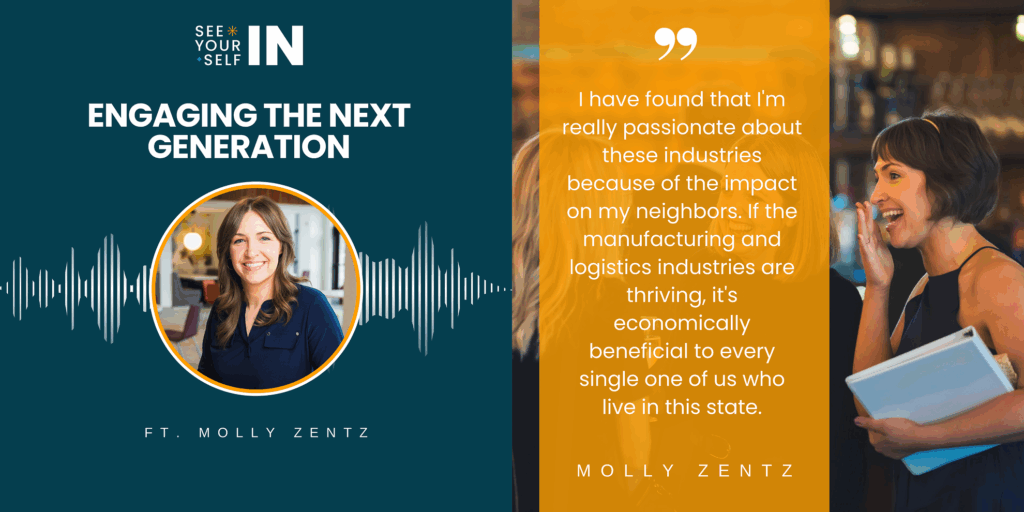
In this episode of See Yourself IN, host Casey Harrison talks with Molly Zentz, VP of Communications at Conexus Indiana. Molly shares her inspiring journey from growing up in Peru, Indiana, to shaping a successful career in communications. She discusses her educational path, the decision to stay in Indiana, and valuable real-world experience. Molly highlights Indiana’s leadership in manufacturing and logistics, the adoption of cutting-edge technologies like collaborative robots, and the efforts to tackle workforce challenges. She also emphasizes the importance of hands-on experience, the role of communication in industry growth, and the impact of programs like Rising 30 and Make and Move. Additionally, she shares advice on career exploration, leveraging personal connections, and maintaining work-life balance.
5 Key Takeaways:
1. Advanced manufacturing and logistics are high-tech, innovative industries. Forget outdated images of factories – these fields are driven by robotics, sensor technology, and data analysis.
2. Diverse career paths exist within these industries. While engineering is key, there are also opportunities in marketing, communications, HR, and more.
3. Early hands-on experience is invaluable. Internships, job shadowing, and volunteering can help you discover your passion and build your skills.
4. Leverage your network for career exploration. Talk to family, friends, and mentors about their jobs and industries.
5. Setting boundaries demonstrates leadership. Prioritizing work-life balance shows self-respect and can enhance your career prospects.
For more resources on advanced industries, jobs, companies, and opportunities in Indiana, visit www.cicpindiana.com/syi.