This article was originally published by TechPoint. Click here to read the original article.
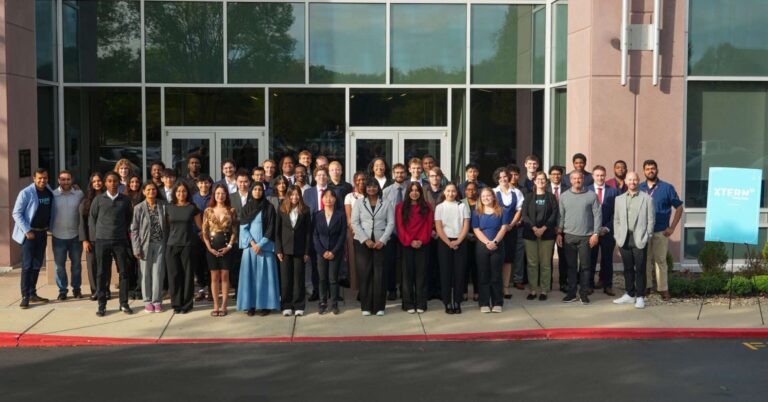
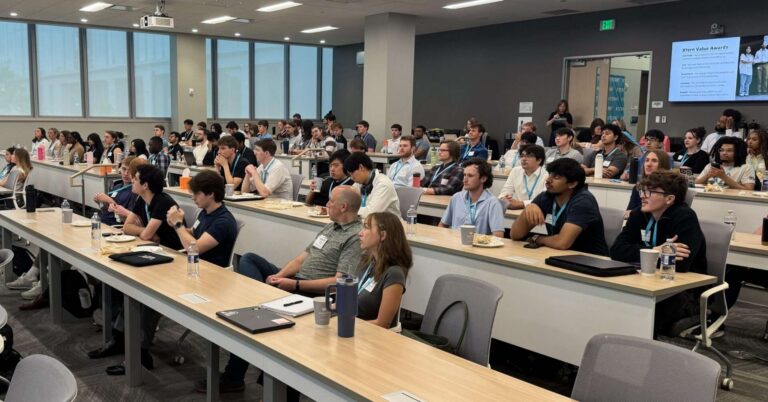
On June 26, Xterns gathered for their second programming weekend of the summer, this time at Republic Airways in Carmel, IN. IndyHackers and a group of former Xterns joined the cohort for a full day centered on AI and the ever-changing workforce.
Welcome Remarks
The morning began with remarks from Matt Belanger, Vice President of Information Technology and Chief Information Officer at Republic Airways, who welcomed Xterns into the space and spoke to the importance of interns and the work they contribute. He even gave a shout-out to Republic’s own Xtern, Samuel Ortner.
Today’s AI: We’ve Seen This All Before, and Will Again
Chris Vannoy, President of IndyHackers, delivered the morning’s keynote, built around one central idea: we’ve seen this before. He pointed to three previous technology cycles over the past 40 years: personal computing, the internet and mobile phones. He pointed out that each reshaped how we live and work by moving through the same three stages: boom, bust and absorption.
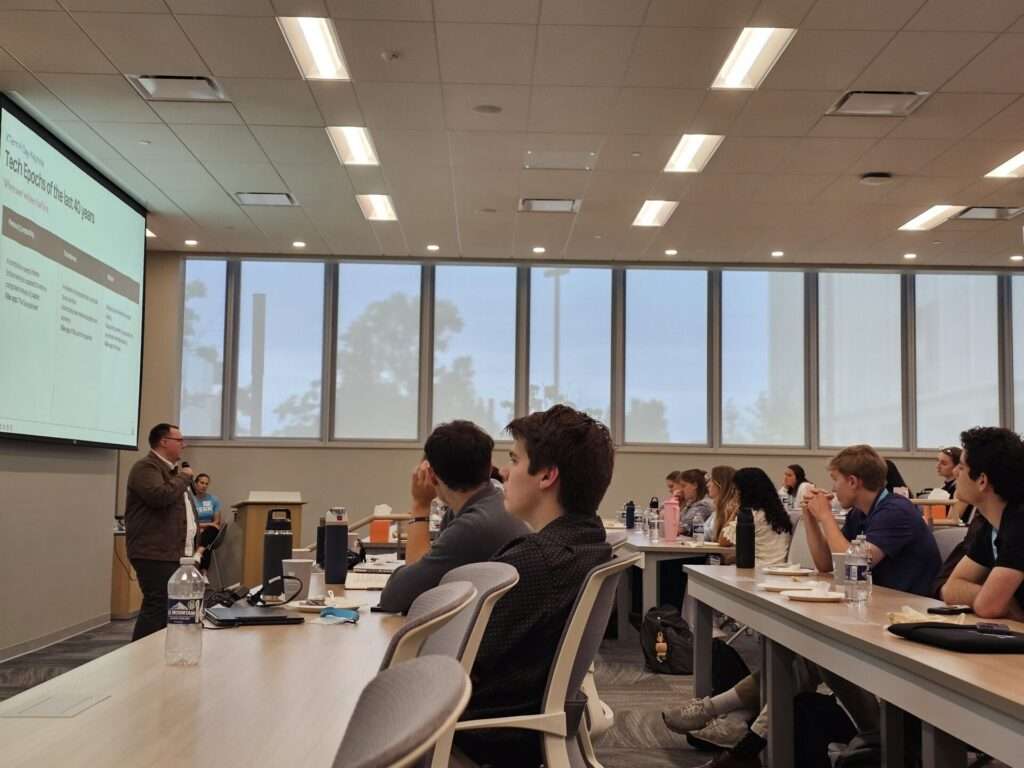
Chris Vannoy leads the Xtern AI Day keynote, “Tech Epochs of the Last 40 Years,” walking Xterns through four decades of major technology shifts ahead of a deeper look at artificial intelligence.
Vannoy defined the boom as the moment money starts flowing and experimentation runs wild, the bust as the point where that money comes due and clear winners and losers emerge, and absorption as the stage where the technology finally becomes mainstream and fades into the background of everyday life. In his view, AI is currently in its “boom baby” phase, with much of its potential still being discovered. “No one knows for certain where this is headed. I have theories, but only because I’ve lived through this before,” he told the group.
He also pointed to the opportunity AI presents for Gen Z specifically, noting that companies are already subsidizing employees’ use of AI tools. His advice: play around, experiment and have fun learning and growing alongside the technology.
AI & Skill Change Panel
Following the keynote, Sally Reasoner, VP of Talent Strategy, moderated a panel featuring Mike Hocherman (Trava Security), Tylor Garret (Sense), Alex Correa (Eli Lilly), and Daniel Shickell (Republic Airways). Notably, Tylor, Alex and Mike were all members of the very first Xtern cohort.
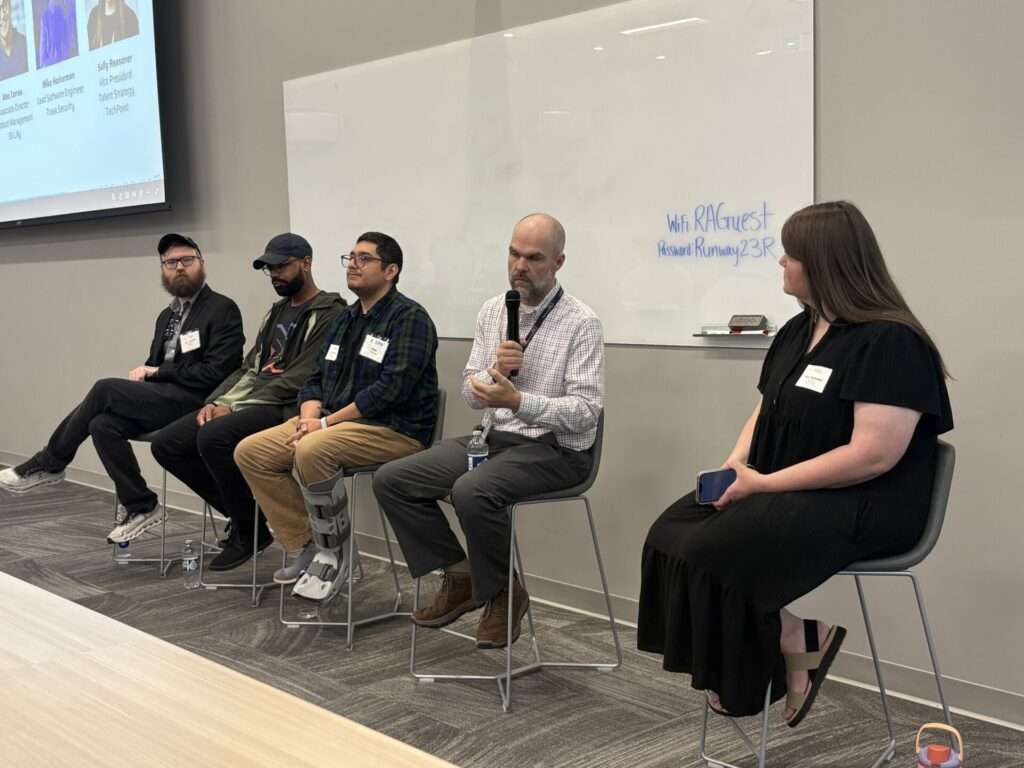
Mike Hockerman of Trava Security, Tylor Garret of Sense, Alex Correa of Eli Lilly, and Daniel Shickell of Republic Airways joined TechPoint’s Sally Reasoner (left to right) for a panel focused on AI and skill changes panel.
Reasoner asked the panelists about their use of AI tools day-to-day and how their expectations compared to reality. Across the board, the consensus was similar: AI is useful for a lot of things, but it can’t replicate the emotion and connection that only humans bring to the table.
Correa emphasized the importance of getting comfortable with AI now, since every career path will eventually intersect with it. Whether that means streamlining a workflow or getting help revising an email. When the conversation turned to job interviews, the panelists were unanimous: don’t let AI tell your story. Personal projects and experiences that don’t show up on a resume tend to generate real excitement in an interview, and that’s worth leaning into. Hocherman added that personal, human questions resonate far more than anything AI-generated ever could, so let your enthusiasm show.
While using AI early in your career is almost expected at this point, Correa encouraged Xterns to also seek out a mentor, someone who can teach the things AI simply can’t. Shickell agreed, adding that as AI continues to advance, human connection and the ability to have a real conversation will only become more valuable. Still, staying curious and continuing to experiment with AI matters. As one panelist put it, human skills won’t be replaced, because humans are intelligent and resilient – so don’t be afraid to use the tools available.
AI Workshops
Xterns then broke into one of three workshops: AI Safety, AI for Business and Marketing Professionals, or AI in CAD. Each session explored how AI is being applied within a specific field, introduced different AI tools, and underscored the importance of using AI safely and responsibly. Students left the workshops ready to share what they learned and put those tools into practice.
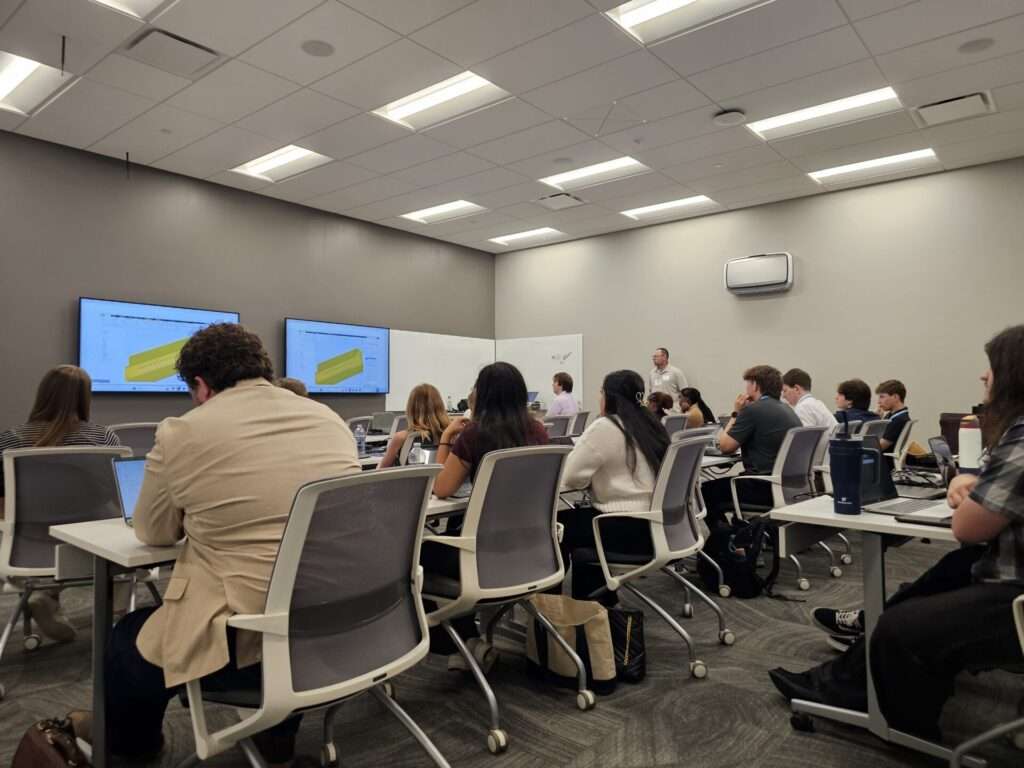
Xterns work through a hands-on 3D modeling exercise during an engineering workshop session at summer programming.
The AI Safety workshop dug into the rapid rise of agentic engineering in software development over the past six months. It covered both the advantages and pitfalls of AI-generated code – including cost – and how to strengthen an agentic toolchain with better guardrails and auditability. The session also walked through how Skills, Agents and Servers function within Claude Code and Codex, along with practical tips for setting AI on autopilot, and introduced Statewright.ai, an agentic harness designed to close some of the current gaps in agentic engineering software development lifecycles
The AI for Business and Marketing Professionals workshop looked at how generative AI has reshaped marketing and sales from the ground up. Content marketing has had to adapt to a landscape flooded with undifferentiated AI-generated content, all while search engine traffic has dropped significantly. At the same time, new startups are emerging daily with AI-driven bots and avatars aimed at replacing SDRs and BDRs. The session examined how the industry is adjusting to this new reality – which tools are rising to the top, how the day-to-day work is changing, and which skills matter now more than ever.
The AI in CAD workshop explored how AI is being built into PTC’s Creo Parametric software through three stages of maturity: Advise, Assist, and Automate. Creo Advise acts as a chatbot for engineering support, while Creo Assist works directly with a user’s model to validate designs, check compliance, and surface insights. Looking ahead, Creo Automate, expected in late 2026 or early 2027, will use historical CAD data and manufacturing standards to suggest and optimize designs automatically through multi-agent orchestration via the Model Context Protocol (MCP).
Closing Remarks
Sally Reasoner closed out the afternoon by looking ahead to upcoming events, including Community Connect on Friday, July 24, at the NCAA Hall of Champions in Indianapolis from 9 am to 1 pm.
Current Xterns who still need to register, or who want to register a project to present, can do so here. Community members interested in joining TechPoint at Community Connect can learn more and register at techpoint.org/communityconnect.